Author: probloggerpk1@gmail.com

  • The Cinematography Tricks That Make ‘1917’ Unforgettable

    When you watch 1917, you might notice something feels different right away. The movie flows like one long, unbroken shot that follows two soldiers on a dangerous mission through enemy territory. This isn’t just a cool trick – it’s a carefully planned series of camera moves that makes you feel like you’re right there with them.

    The film’s director, Sam Mendes, wanted viewers to experience World War I the way soldiers did – without cuts or breaks in the action. Every step, every explosion, and every quiet moment happens in real-time. This creates a sense of tension that builds and builds until you can barely stand it.

    The magic behind this effect comes from cinematographer Roger Deakins and his team. They planned every single movement of the camera for months before filming began. They had to figure out how to move the camera through trenches, across battlefields, and even into water without ever breaking the shot.

    What makes 1917 special isn’t just the long takes – it’s how those takes serve the story. The camera becomes your eyes, showing you exactly what the soldiers see as they move deeper into danger. When they run, you run. When they hide, you hide. This creates an emotional connection that traditional editing simply can’t match.

    The technical challenges were enormous. The crew had to build entire sets that could be moved or adjusted while the camera rolled. They dug trenches that were wide enough for the camera to follow the actors. They even created special rigs that let the camera move smoothly over rough terrain without bumping or shaking.

    ###IMAGE_PROMPT_START###
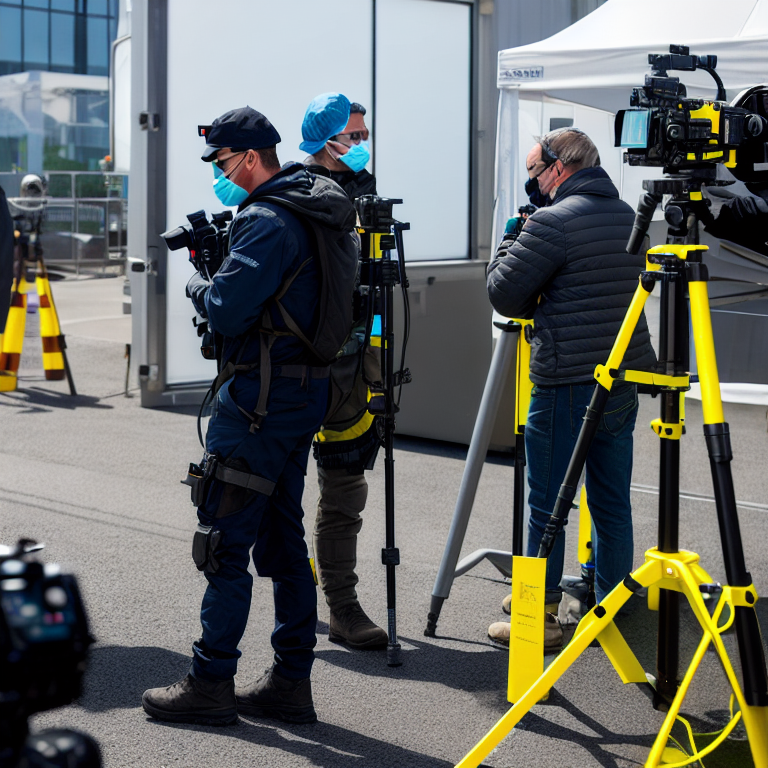
    A behind-the-scenes shot of the 1917 film crew setting up an elaborate camera rig system, with multiple technicians adjusting tracks and equipment while the main camera follows actors through a meticulously constructed trench set. The image shows the complex coordination required, with lighting equipment, cables, and crew members working together to achieve the seamless one-shot effect that defines the film’s visual style.

    ###CONTENT_START###
    The result is a movie that feels more like a real experience than a film. You don’t watch 1917 – you live it. The cinematography tricks used in this film have changed how we think about storytelling in movies, proving that sometimes the simplest ideas (like not cutting) can create the most powerful effects.

    The Long Take: More Than Just a Gimmick

    The most obvious trick in 1917 is the long take, but calling it a gimmick misses the point entirely. These extended shots serve a specific purpose – they make time feel real and immediate. When the soldiers have to deliver a message before morning, you feel every minute ticking by because the camera never lets you escape.

    Traditional movies use cuts to compress time or change locations quickly. 1917 does the opposite. A journey that might take seconds in another film becomes minutes of real-time tension. This forces viewers to experience the same physical and emotional journey as the characters.

    The long takes also create a documentary-like feeling. The camera moves like someone following the soldiers, sometimes getting close, sometimes pulling back to show the scale of destruction around them. This creates a sense of authenticity that makes the war feel more real and more terrifying.

    But these long takes aren’t actually one continuous shot – they’re dozens of carefully hidden cuts. The editors and cinematographers worked together to find natural places to hide these transitions: when the screen goes completely black, when the camera moves behind an object, or when the scene changes from day to night.

    The Art of the Invisible Cut

    Creating the illusion of one continuous shot required hundreds of invisible cuts throughout the film. These hidden transitions are works of art in themselves, designed to be completely unnoticeable to the average viewer.

    One common technique was to move the camera behind a solid object – like a wall, a truck, or a group of soldiers – and then continue the shot from a different angle. The darkness or obstruction gives the editors a few frames where they can seamlessly join two different takes together.

    Another trick was to use natural light changes. As characters move from bright sunlight into shadow or from day into night, the changing light provides cover for a cut. The human eye naturally expects some disruption during these transitions, making them perfect hiding spots.

    The most impressive invisible cuts happen during camera movements. When the camera follows a character who suddenly turns a corner or goes through a doorway, the editors can join two separate shots together during that moment of transition. The smooth camera movement makes the cut completely invisible.

    These invisible cuts required incredible precision from everyone involved. The actors had to hit their marks perfectly, the camera operators had to move with exact timing, and the lighting had to match exactly between takes. One small mistake could ruin an entire day of filming.

    Camera Movement as Character Development

    In 1917, the way the camera moves tells us as much about the characters as their dialogue does. When the camera stays close to the soldiers, we feel their fear and exhaustion. When it pulls back to show the vast destruction around them, we understand the scale of their mission.

    The camera often mirrors the physical state of the characters. When they’re tired, the camera movement becomes slower and more labored. When they’re running for their lives, the camera becomes more frantic and unstable. This creates a physical connection between the viewer and the characters.

    There are moments when the camera seems to breathe with the characters. During quiet scenes, it moves slowly and deliberately, giving us time to absorb the emotional weight of the moment. During action scenes, it becomes more aggressive and unpredictable, matching the chaos of battle.

    The camera also acts as an emotional guide. It knows when to get close to show a character’s pain and when to pull back to show their isolation. It understands when to focus on the beauty of a moment and when to emphasize the horror. This creates a deeply emotional experience that goes beyond simple storytelling.

    The relationship between camera and character is so seamless that viewers often don’t notice it happening. But this invisible connection is what makes 1917 such a powerful emotional experience. The camera becomes a silent character itself, guiding us through the story with purpose and precision.

    Lighting the Impossible: Natural vs. Artificial

    Roger Deakins faced enormous challenges lighting 1917, especially since many scenes required both natural-looking light and complete control over every shadow and highlight. The solution was a combination of practical lighting and clever cinematography tricks.

    For daytime scenes, the team often used massive silk screens to diffuse sunlight and create consistent lighting throughout long takes. These enormous fabric panels could be adjusted to control the quality and direction of light, making outdoor scenes look natural while giving the cinematographers complete control.

    Night scenes presented different challenges. Instead of using obvious artificial lights, the team often hid practical light sources within the scene itself. Fires, lanterns, and even the light from explosions became the primary sources of illumination. This created a realistic look while serving the story’s needs.

    The film’s most famous night scene – the burning city of Écoust – required months of planning. The entire set was built with lighting in mind, with hidden practical lights and carefully placed fires creating the dramatic illumination. The camera could move freely through this environment because every light source was real and functional.

    Water scenes added another layer of complexity. When characters move through rivers or flooded trenches, the water reflects and refracts light in unpredictable ways. The team had to account for these effects while maintaining consistent lighting throughout long takes.

    The result is lighting that feels completely natural while serving the dramatic needs of each scene. You never notice the lighting tricks because they’re so perfectly integrated into the story world. This invisible craftsmanship is what makes the cinematography in 1917 so powerful.

    Production Design: Building Worlds for the Camera

    The production design in 1917 had to serve the cinematography in unique ways. Since the camera never cuts away, every set had to be completely functional and accessible from every angle. This meant building entire worlds rather than just filming specific shots.

    The trenches were perhaps the most challenging sets to create. They had to be wide enough for actors to move through naturally while also accommodating the camera and crew. The production team built miles of trenches that could be adjusted and modified as needed during filming.

    Each location had to tell a story while also serving the technical needs of the long takes. A destroyed town wasn’t just a backdrop – it was a carefully constructed environment that the camera could explore in detail. Every piece of debris, every broken window, and every piece of furniture had to be placed with purpose.

    The sets also had to be durable enough to withstand weeks of filming. Unlike traditional movies where damaged sets can be quickly replaced between cuts, 1917’s continuous shots meant that every set had to remain consistent throughout entire filming days.

    Color played an important role in the production design as well. The muted earth tones of the trenches and battlefields created a sense of grim reality, while occasional splashes of color – like the red of blood or the blue of a soldier’s eyes – drew attention to important emotional moments.

    The attention to detail in the production design is staggering. Every element of every set was chosen to support both the story and the cinematography. This created a completely immersive world that the camera could explore without ever revealing the illusion.

    Sound Design: The Invisible Partner to Cinematography

    While the cinematography in 1917 is spectacular, it works hand-in-hand with the sound design to create the film’s immersive experience. The sound team faced unique challenges because the continuous camera movement meant they couldn’t rely on traditional editing techniques to build tension or emotion.

    The sound design had to match the real-time nature of the long takes. Every footstep, every breath, and every distant explosion had to be perfectly timed and placed. The sound team recorded thousands of effects on location to capture the authentic sounds of World War I battlefields.

    Spatial audio played a crucial role in making the continuous shots feel real. As the camera moves through different environments – from narrow trenches to open fields to burning cities – the sound changes naturally to match the space. This creates a three-dimensional audio experience that complements the visual storytelling.

    The mixing process was particularly challenging because traditional sound editing relies heavily on cuts and transitions. The team had to find new ways to build tension and release it without the usual tools of sound editing. They used subtle changes in ambient sound, carefully timed sound effects, and dynamic mixing to guide the audience’s emotions.

    Music also had to be integrated carefully into the continuous shots. Composer Thomas Newman’s score had to feel like a natural part of the soundscape rather than something layered on top. The music often emerges gradually from ambient sounds, creating a seamless blend of score and effects.

    The result is a sound design that feels completely invisible while being absolutely essential to the film’s impact. The audio experience is so perfectly integrated with the visuals that you can’t separate them – they become one unified storytelling tool.

    The Human Element: Acting in Long Takes

    Performing in 1917 presented unique challenges for the actors. Without the safety net of cuts and multiple takes from different angles, they had to deliver complete, emotionally consistent performances in single, extended shots.

    George MacKay and Dean-Charles Chapman, who play the two main soldiers, had to maintain intense emotional states for minutes at a time. This required incredible physical and mental stamina, as well as precise coordination with the camera and other actors.

    The blocking – the precise movement of actors through each scene – became crucial. Every step, every gesture, and every moment of stillness had to be carefully planned and executed. The actors had to know exactly where to be and when, often coordinating their movements with complex camera rigs and crew members.

    Emotional continuity was perhaps the biggest challenge. In traditional filmmaking, actors can build emotional moments piece by piece, shot by shot. In 1917, they had to create complete emotional arcs in single takes, often while dealing with the physical challenges of running, climbing, or moving through difficult terrain.

    The actors also had to be aware of the camera’s relationship to their performance. Sometimes the camera needed to be close to capture subtle emotional moments; other times it needed to pull back to show the scale of the environment. The actors had to perform naturally while being constantly aware of these technical requirements.

    Despite these challenges, the performances in 1917 feel completely natural and spontaneous. This is a testament to the skill of the actors and their ability to make the technical demands of the long takes invisible to the audience.

    Technical Innovations: New Tools for Old Stories

    Creating 1917 required developing new filmmaking techniques and technologies. The traditional tools of cinema weren’t designed for the continuous, immersive style that Mendes and Deakins envisioned.

    One major innovation was the development of new camera rigs that could move smoothly through complex environments. These custom-built systems allowed the camera to follow actors through trenches, over obstacles, and even into water without the usual limitations of traditional equipment.

    The team also developed new methods for coordinating complex camera movements with actor performances. This involved extensive pre-visualization, where every shot was planned and tested digitally before filming began. The actors could then rehearse with this virtual version of the shot before performing it for real.

    Steadicam operators played a crucial role in many of the film’s most impressive shots. These skilled technicians had to maintain perfect stability while moving through challenging terrain, often while carrying heavy camera equipment. Their work is invisible to most viewers but essential to the film’s success.

    The lighting equipment also had to be rethought for 1917. Traditional lighting setups often require multiple cuts and adjustments, but the continuous style of this film meant that lights had to be hidden within the sets or designed to move naturally with the camera.

    These technical innovations weren’t just about showing off – they were developed specifically to serve the story. Every new tool or technique was created to help immerse the audience more completely in the world of the film.

    Historical Accuracy: Cinematography That Serves Truth

    While 1917 is a work of fiction, it aims for historical accuracy in its depiction of World War I. The cinematography plays a crucial role in creating this authenticity, using visual techniques that reflect the reality of the period.

    The muted color palette reflects the actual appearance of the Western Front, where dust, mud, and smoke created a world of browns and grays. The lighting choices avoid the dramatic, contrasty look of many war films in favor of something more realistic and grounded.

    The camera work avoids the heroic, sweeping movements often associated with war films. Instead, it stays grounded and practical, moving in ways that feel possible for the period. This creates a sense of historical truth that supports the film’s emotional impact.

    Even the camera’s limitations serve the historical accuracy. The restricted movement through trenches and the difficulty of moving through mud and water reflect the real challenges faced by soldiers during World War I. These limitations become part of the storytelling rather than obstacles to overcome.

    The attention to historical detail extends to every aspect of the cinematography. From the accurate depiction of period uniforms to the realistic portrayal of battlefield conditions, every visual element was chosen to create an authentic representation of the past.

    This commitment to historical accuracy through cinematography helps 1917 feel like more than just a movie – it feels like a window into a real historical moment, making the emotional impact even more powerful.

    The Legacy: How 1917 Changed Filmmaking

    The cinematography techniques developed for 1917 have influenced filmmaking far beyond this single movie. The success of the continuous shot approach has inspired other directors to experiment with similar techniques and has pushed the entire industry to think differently about visual storytelling.

    One major impact has been on how filmmakers think about time and pacing. The success of 1917’s real-time approach has shown that audiences are willing to engage with slower, more immersive storytelling when it serves the narrative effectively.

    The technical innovations developed for the film have also found applications in other productions. The custom camera rigs, advanced pre-visualization techniques, and invisible cut methods are now being adapted for use in different types of films and even television productions.

    The film has also influenced how cinematographers think about the relationship between camera and audience. The immersive approach of 1917 has inspired other filmmakers to experiment with ways to make viewers feel more connected to the story and characters.

    Perhaps most importantly, 1917 has shown that technical innovation in service of storytelling can create truly powerful cinema. It’s not just about showing off new techniques – it’s about using every tool available to create the most effective emotional experience for the audience.

    The legacy of 1917’s cinematography continues to evolve as new filmmakers build on the techniques and approaches developed for this groundbreaking film. It stands as a milestone in the ongoing evolution of visual storytelling.

    Frequently Asked Questions (FAQ)

    How many cuts are actually in 1917?

    While 1917 appears to be one continuous shot, it actually contains several hidden cuts. The exact number varies depending on how you count them, but there are approximately 5-6 visible cuts and several more invisible ones hidden within the continuous flow of the film. These cuts are carefully disguised through techniques like moving behind objects, changing light levels, or transitioning between different times of day.

    Did they really film 1917 in one take?

    No, 1917 was not filmed in a single continuous take. The movie was shot in multiple takes ranging from a few minutes to over 10 minutes each. These individual takes were then seamlessly edited together to create the illusion of one continuous shot. The longest unbroken takes in the film last several minutes and required incredible coordination between actors, camera operators, and crew members.

    What camera equipment did they use for 1917?

    The primary camera used for 1917 was the Arri Alexa Mini, a lightweight digital cinema camera that could be mounted on various rigs and stabilizers. The team also used specialized Steadicam rigs, drone cameras, and custom-built camera systems designed specifically for the film’s unique requirements. The choice of equipment was driven by the need for both high-quality image capture and extreme mobility.

    How long did it take to plan the cinematography for 1917?

    The planning process for 1917’s cinematography took several months before filming began. Roger Deakins and his team spent extensive time storyboarding every shot, creating detailed pre-visualizations, and planning the complex camera movements. The actual filming took about 12 weeks, but the preparation period was crucial to the film’s success and involved constant collaboration between the director, cinematographer, production designer, and visual effects team.

    What makes Roger Deakins’ cinematography in 1917 so special?

    Roger Deakins’ work on 1917 is remarkable for several reasons. First, he created a visual style that serves the story perfectly, using the continuous shot approach to immerse viewers in the experience of war. Second, he solved enormous technical challenges to make the long takes work, from lighting complex environments to coordinating camera movements with actor performances. Finally, his cinematography maintains emotional authenticity throughout, never letting the technical achievements overshadow the human story at the film’s core.

    Conclusion

    The cinematography in 1917 represents a perfect marriage of technical innovation and emotional storytelling. Every camera movement, every lighting choice, and every invisible cut serves a specific purpose – to make viewers feel like they’re experiencing World War I alongside the soldiers.

    What makes these cinematography tricks truly unforgettable isn’t their technical complexity, but how invisible they become in service of the story. When you watch 1917, you don’t think about the camera work or the editing – you simply experience the journey. This is the highest achievement possible for any cinematographer: creating visual magic that supports rather than overshadows the human story.

    The techniques developed for 1917 have opened new possibilities for filmmaking, showing that innovative approaches to visual storytelling can create deeper emotional connections with audiences. As other filmmakers build on these techniques, we can expect to see even more creative uses of continuous shooting, invisible editing, and immersive cinematography.

    Ultimately, the unforgettable quality of 1917’s cinematography comes from its perfect alignment with the film’s themes and emotions. The continuous, unbroken visual style mirrors the relentless nature of war itself – there are no cuts, no breaks, no escape from the experience. This creates not just a movie, but a genuine emotional journey that stays with viewers long after the credits roll.

    The cinematography tricks in 1917 remind us that the most powerful filmmaking often comes from the simplest ideas executed with extraordinary skill and dedication. Sometimes, the best way to tell a story is to let the camera keep rolling and trust the audience to follow along on the journey.

  • Why ‘Mad Max: Fury Road’ Is a Feminist Masterpiece

    Why ‘Mad Max: Fury Road’ Is a Feminist Masterpiece

    When most people think about Mad Max: Fury Road, they picture insane car chases, spectacular explosions, and wild costumes in a post-apocalyptic desert. And yes, the movie absolutely delivers on all that action. But beneath the roaring engines and spectacular stunts lies something deeper and more revolutionary – a story that challenges how we think about heroes, power, and gender roles in action movies.

    This 2015 blockbuster, directed by George Miller, became much more than just another sequel in the Mad Max franchise. It sparked conversations about feminism in action films and showed that you can have intense, thrilling entertainment while also telling a story centered on women’s strength, agency, and survival. Let’s explore why this movie stands as a true feminist masterpiece and how it changed the game for action cinema.

    Furiosa: The Hero We Didn’t Expect

    The heart of Fury Road beats with Imperator Furiosa, played brilliantly by Charlize Theron. Right from her first appearance, she commands attention – not through exposition or backstory, but through action and presence. She’s missing part of her arm, she’s got a shaved head, and she wears combat gear that’s practical rather than sexualized. This isn’t your typical female action hero.

    What makes Furiosa revolutionary is that she’s never defined by her relationships to men or by traditional feminine qualities. She’s a warrior, a leader, and a survivor who takes charge of her destiny. The movie doesn’t waste time explaining why she’s strong or making excuses for her capabilities. She simply is who she is, and everyone in the story accepts that without question.

    Her journey isn’t about finding love or proving herself to anyone. Instead, it’s about redemption and freedom – themes that resonate universally but are particularly powerful when centered on a female character in an action context. Furiosa drives the entire plot forward, making decisions that affect everyone around her. She’s not a sidekick or a love interest; she’s the protagonist, with Max serving more as her ally than her savior.

    The Wives: More Than Damsel in Distress

    The five wives – Angharad, Capable, Toast, Cheedo, and Dag – could have easily been written as helpless victims who need saving. After all, they’re escaping sexual slavery under the brutal warlord Immortan Joe. But Fury Road takes a different approach that elevates these characters beyond typical action movie tropes.

    Each wife has distinct personality traits and contributes meaningfully to their escape and survival. They’re not interchangeable beauties waiting to be rescued. Angharad is pregnant and fights through her condition. Capable shows emotional intelligence and compassion, even toward their enemy Nux. Toast demonstrates strategic thinking and weapon skills. Cheedo grapples with fear but ultimately finds courage. Dag provides sharp commentary and perspective.

    Most importantly, they’re active participants in their liberation rather than passive recipients of rescue. They make choices, take risks, and support each other through trauma. The film shows their scars – both physical and emotional – without exploiting their suffering for cheap drama. Their journey toward freedom becomes a collective effort where they save themselves as much as they’re saved by others.

    Breaking the Male Savior Complex

    Traditional action movies often follow a pattern where male heroes rescue female characters who exist mainly to be saved. Fury Road deliberately subverts this expectation in several clever ways. Max, the titular character, actually spends much of the movie as a passenger in his own story – literally handcuffed to the front of a car for a significant portion.

    When Max and Furiosa first meet, there’s potential for the typical “hero saves the helpless woman” dynamic. Instead, they form an alliance based on mutual need and respect. Furiosa remains the primary driver of their mission, with Max contributing as an equal partner rather than a superior savior. Their relationship develops through cooperation rather than rescue.

    The wives also reject the idea that they need male protection. When Max suggests he could help them escape, Furiosa immediately asserts that they had a plan before he arrived. The movie consistently shows women solving their own problems, defending themselves, and making strategic decisions. Even the male characters who join their cause – like Nux – do so by rejecting toxic masculinity and embracing more cooperative, respectful approaches.

    Visual Storytelling That Speaks Volumes

    Fury Road demonstrates feminist principles not just through its plot and characters, but through its visual language. The costume design is particularly noteworthy. The wives wear sheer, white fabric that represents their purity and value to Immortan Joe, but as they journey toward freedom, their clothing becomes more practical and less sexualized. They’re never shown in exploitative poses or gratuitous nudity.

    Furiosa’s costume design emphasizes function over form. She wears armor that protects her, boots that allow her to move and fight effectively, and her missing arm is never hidden or treated as a weakness. The film treats her physical difference matter-of-factly, showing that disability doesn’t prevent someone from being a capable leader and warrior.

    The color palette also reinforces the film’s themes. The wives’ white costumes contrast sharply with the grim, polluted world around them, symbolizing hope and innocence. As they move toward freedom, the visual storytelling supports their journey without reducing them to objects of the male gaze. Even in the most intense action sequences, the camera focuses on their agency and determination rather than their bodies.

    Female Relationships That Drive the Plot

    One of the most powerful aspects of Fury Road is how it centers relationships between women without making them secondary to male characters. The bond between Furiosa and the wives, the solidarity among the wives themselves, and the connection to the Vuvalini (the matriarchal society Furiosa comes from) all drive the narrative forward.

    These relationships aren’t defined by competition or jealousy – common pitfalls in how female characters are often written. Instead, they’re characterized by mutual support, shared trauma, and collective strength. The wives protect each other, share resources, and make decisions together. Furiosa becomes their protector not because she’s a man substituting for absent male authority, but because she understands their struggle and shares their goal of freedom.

    The Vuvalini represent an entire society of women who are skilled, capable, and independent. They’re not nurturing earth mothers or wise old crones – they’re warriors, mechanics, and leaders who have survived in a brutal world through their own strength and intelligence. This portrayal challenges the idea that female power must be soft or maternal rather than fierce and tactical.

    Themes of Reproductive Freedom and Bodily Autonomy

    At its core, Fury Road is about women reclaiming control over their bodies and reproductive rights – themes that resonate strongly with contemporary feminist discourse. The wives are literally valued by Immortan Joe for their ability to produce healthy offspring, reducing them to their reproductive capacity. Their escape represents a fight for bodily autonomy that extends far beyond the film’s post-apocalyptic setting.

    The movie handles these themes without being preachy or heavy-handed. The pregnancy of Angharad becomes a source of strength rather than weakness – she continues fighting and making decisions throughout their journey. The film shows how reproductive control is fundamental to personal freedom, and how systems of oppression often center on controlling women’s bodies.

    This aspect of the story connects to real-world feminist struggles for reproductive rights, healthcare access, and freedom from sexual exploitation. By framing these issues within an action movie context, Fury Road makes feminist themes accessible to audiences who might not engage with more overtly political content. It shows that stories about women’s autonomy can be exciting, visually stunning, and commercially successful.

    Action That Serves the Story

    Many action movies use spectacular sequences as empty spectacle, but every action scene in Fury Road serves the story and themes. The car chases aren’t just cool set pieces – they represent the pursuit of freedom and the obstacles that stand in the way. When Furiosa fights, it’s always in service of her mission and her values, not for gratuitous violence.

    The film’s approach to action also challenges traditional gender expectations. Women engage in combat, drive vehicles, and make tactical decisions throughout the movie. There’s no separation between “female” and “male” types of action – everyone fights, everyone drives, everyone contributes according to their skills rather than their gender.

    This egalitarian approach to action extends to how violence is portrayed. While the movie is intense and sometimes brutal, it doesn’t sexualize female suffering or use women’s pain as motivation for male characters. The violence serves the story’s themes about oppression, resistance, and liberation rather than existing purely for shock value.

    Cultural Impact and Industry Influence

    Fury Road’s success demonstrated that feminist action films could be both critically acclaimed and commercially successful. It won six Academy Awards and influenced how studios approach female-led action projects. The film showed that audiences would embrace complex female protagonists and that stories centered on women’s experiences could have universal appeal.

    This impact extended beyond just representation. Fury Road proved that you could make a blockbuster action film with strong feminist themes without compromising on entertainment value. It challenged the assumption that action movies need to cater primarily to male audiences or rely on traditional gender roles to succeed.

    The film’s influence can be seen in subsequent action movies that feature more complex female characters and challenge traditional gender dynamics. It helped create space for films like Wonder Woman, Captain Marvel, and other female-led action projects that might not have been greenlit without Fury Road’s demonstrated success.

    The Broader Conversation About Feminism in Film

    Fury Road arrived during a time when conversations about gender representation in Hollywood were gaining momentum. The film became a touchstone in discussions about the male gaze, female representation, and what feminist storytelling looks like in mainstream entertainment. It showed that you could make a film that appeals to everyone while still centering women’s experiences and perspectives.

    The movie also sparked debates about what constitutes feminist art and who gets to define those terms. Some critics argued that Fury Road wasn’t feminist enough or that its feminism was accidental rather than intentional. These conversations, while sometimes contentious, helped advance understanding of how gender representation works in film and what audiences expect from modern storytelling.

    What’s clear is that Fury Road expanded the possibilities for what action movies could be and who they could be for. It demonstrated that feminist principles – like equality, autonomy, and mutual respect – could enhance rather than detract from entertainment value. The film showed that stories about women’s liberation could be thrilling, beautiful, and meaningful all at once.

    Frequently Asked Questions

    Is Mad Max: Fury Road really a feminist movie if it was directed by a man?

    Absolutely. Feminism isn’t about who creates art but about what messages and values the art promotes. George Miller crafted a story centered on female strength, agency, and liberation. The film’s feminist qualities come from its narrative choices, character development, and thematic focus rather than the gender of its director. Many male filmmakers have created powerful feminist works, just as many female creators make content that doesn’t align with feminist principles.

    How does Fury Road compare to other female-led action movies?

    Fury Road stands out because it doesn’t treat its female characters as exceptions in a male-dominated world or make their gender the central focus of their characterization. Unlike some female-led action films that feel like male movies with women substituted in, Fury Road creates a story where gender dynamics are integral to the plot but don’t define every character interaction. The film also avoids common pitfalls like excessive sexualization or making female strength dependent on male approval.

    What makes Furiosa such a compelling character beyond her gender?

    Furiosa works as a character because she’s written and performed with depth and complexity. She has clear motivations, makes difficult choices, shows vulnerability without weakness, and demonstrates leadership through competence rather than authority. Her missing arm, her past trauma, and her determination all contribute to a fully realized character who happens to be female rather than a “female character” defined by stereotypes about women.

    Did the wives need male characters like Max and Nux to succeed?

    While Max and Nux contribute to the group’s survival, the film makes clear that the wives and Furiosa were already on a path to freedom before they arrived. Max becomes an ally rather than a savior, and Nux’s transformation shows how men can support feminist goals by rejecting toxic masculinity. The story emphasizes collective effort over individual heroism, regardless of gender.

    How does the film handle violence against women?

    Fury Road addresses the reality of violence against women – particularly sexual violence and reproductive exploitation – without graphically depicting it on screen. The film shows the consequences and trauma of this violence while focusing on the characters’ resistance and recovery rather than their suffering. This approach respects the seriousness of these issues while avoiding exploitation for entertainment purposes.

    Why is the film’s approach to gender considered revolutionary for action movies?

    Most action films either exclude women from meaningful roles, reduce them to love interests or victims, or create “strong female characters” who are basically men with breasts. Fury Road does something different by creating female characters with distinct personalities, strengths, and arcs while also exploring how gender affects their experiences in a patriarchal society. It shows that action films can be both entertaining and thoughtful about gender dynamics.

    Conclusion

    Mad Max: Fury Road succeeds as a feminist masterpiece because it proves that you don’t have to choose between thrilling entertainment and meaningful representation. The film delivers spectacular action, stunning visuals, and compelling characters while also advancing feminist themes about autonomy, equality, and collective liberation. It challenges traditional action movie formulas without feeling preachy or sacrificing entertainment value.

    What makes Fury Road truly revolutionary is how naturally it integrates feminist principles into its storytelling. The women drive the plot, make the tough decisions, and ultimately determine their own fates. The male characters who support them do so by embracing cooperation over domination. The film shows a world where everyone’s contributions matter regardless of gender, and where freedom is worth fighting for on multiple levels.

    More than just a great action movie or a successful experiment in feminist storytelling, Fury Road represents what mainstream cinema can achieve when it takes risks and trusts audiences to embrace more complex, inclusive narratives. It demonstrated that stories centered on women’s experiences could captivate global audiences and earn critical acclaim. In doing so, it helped pave the way for a new generation of action films that recognize women as full participants in stories of heroism, survival, and liberation.

    The legacy of Fury Road extends beyond its immediate impact. It showed filmmakers that feminist storytelling isn’t a limitation but an opportunity for richer, more interesting narratives. It proved to studios that audiences would embrace female-led action films. And most importantly, it gave viewers – especially women and girls – action heroes who reflect their own strength, complexity, and capacity for leadership. That’s why this roaring, thundering masterpiece deserves its place as a landmark in both action cinema and feminist storytelling.

  • The Real-Life Inspirations Behind ‘The Crown’: Royal Truths Revealed

    The Real-Life Inspirations Behind ‘The Crown’: Royal Truths Revealed

    When you watch “The Crown,” you’re seeing more than just a TV drama about the British royal family. You’re watching a carefully crafted story that blends historical facts with creative storytelling. The Netflix series has captivated millions with its portrayal of Queen Elizabeth II’s reign, but how much of what we see is real? Let’s dive into the fascinating true stories behind the show’s most dramatic moments.

    The creators of “The Crown” spent years researching royal archives, biographies, and historical documents to bring authenticity to the screen. However, they also took creative liberties to make the story more engaging for viewers. Understanding the real-life inspirations behind the show helps us appreciate both the historical accuracy and the artistic choices that make “The Crown” so compelling.

    The Queen’s Early Years: More Than Just a Young Princess

    The early seasons of “The Crown” focus on Queen Elizabeth II’s transformation from a young princess to a monarch. The show accurately depicts her unexpected ascension to the throne in 1952 after her father, King George VI, died unexpectedly. However, the series also dramatizes her relationship with Prince Philip, showing their struggles with duty versus personal happiness.

    In reality, Elizabeth and Philip’s marriage faced similar challenges to those portrayed on screen. They married in 1947 when Elizabeth was just 21 years old, and Philip had to give up his Greek and Danish royal titles to marry her. The show captures their complex dynamic well, though some intimate details remain private family matters.

    Winston Churchill’s Relationship with the Young Queen

    One of the most fascinating aspects of early “The Crown” seasons is the relationship between Queen Elizabeth II and Prime Minister Winston Churchill. The show portrays Churchill as a father figure and mentor to the young queen, which aligns with historical accounts. When Elizabeth became queen at age 25, Churchill was already a seasoned politician in his 70s.

    Their weekly meetings, shown in the series, were indeed a crucial part of British governance. These private conversations between the monarch and prime minister remain confidential to this day, but historians believe they developed a genuine friendship and mutual respect. The show captures this dynamic beautifully, though some specific conversations are fictionalized for dramatic effect.

    Princess Margaret’s Love Story: Fact vs. Fiction

    The tragic love story between Princess Margaret and Peter Townsend is one of “The Crown’s” most emotional storylines. The show accurately depicts the royal family’s refusal to allow Margaret to marry Townsend, a divorced commoner, due to the Church of England’s stance on divorce at the time.

    However, the series takes some liberties with the timeline and specific events. In reality, Margaret and Townsend’s relationship was more complex than shown, and the royal family’s response was influenced by political considerations beyond just religious doctrine. The emotional toll on Margaret, however, was very real and contributed to her later struggles with mental health and relationships.

    The Profumo Affair: Political Scandal That Rocked Britain

    Season two of “The Crown” delves into the Profumo affair, a major political scandal that exposed the British establishment’s vulnerabilities. The show accurately portrays how Secretary of State for War John Profumo’s affair with Christine Keeler, who was also involved with a Soviet naval attaché, created a national security concern.

    The series captures the media frenzy and political consequences of the scandal, though it compresses some timelines for dramatic purposes. The real Profumo affair had far-reaching implications for British politics and contributed to the Conservative Party’s eventual downfall in 1964.

    Prince Charles and Camilla: The Early Days

    The show’s portrayal of Prince Charles’s early relationship with Camilla Shand (now Duchess of Cornwall) has sparked much discussion. “The Crown” suggests that Charles and Camilla had a connection before his relationship with Diana Spencer, which aligns with historical accounts.

    However, the series takes creative liberties with specific conversations and events. The real relationship between Charles and Camilla was more complex and evolved over many years, influenced by royal duties, family expectations, and personal circumstances that the show can only hint at.

    The Queen’s Leadership During Crisis

    Throughout the series, we see Queen Elizabeth II navigating various national crises, from the Aberfan disaster to the miners’ strike. The show generally portrays her leadership style accurately – calm, measured, and focused on duty above personal feelings.

    However, many of her private thoughts and specific conversations during these events remain unknown. The series fills these gaps with educated speculation based on historical context and known patterns of her behavior. Her famous commitment to duty and the monarchy’s role in modern Britain comes through clearly in both the show and historical records.

    How “The Crown” Handles Historical Accuracy

    The creators of “The Crown” have been transparent about their approach to historical accuracy. They aim to capture the essence of historical events and relationships rather than provide a documentary-style retelling. This approach allows them to explore the emotional truth of situations while maintaining dramatic tension.

    For instance, the show often compresses timelines, combines characters, or invents specific conversations to serve the narrative. This creative license has drawn criticism from some historians and royal family members, but it also makes the series more engaging for general audiences.

    The Impact of “The Crown” on Public Perception

    “The Crown” has significantly influenced how people view the British royal family and British history. The show has sparked renewed interest in royal history, leading many viewers to research the actual events portrayed on screen.

    This phenomenon has created a new form of historical engagement, where entertainment media drives public interest in real historical events. However, it also raises questions about how fictionalized portrayals can shape public understanding of historical figures and events.

    Where to Learn More About Royal History

    If “The Crown” has sparked your interest in British royal history, there are many resources available to learn more. The Royal Family’s official website provides accurate historical information about the monarchy. Additionally, many biographies and historical texts offer detailed accounts of the events portrayed in the series.

    For those interested in how media shapes historical narratives, you might find our article on how movie reviews affect box office numbers particularly interesting, as it explores similar themes of public perception and media influence.

    The Future of Royal Storytelling

    As “The Crown” continues to explore more recent history, it faces new challenges in balancing historical accuracy with compelling storytelling. The show must navigate sensitive topics involving living people while maintaining its commitment to dramatic excellence.

    This challenge reflects a broader trend in historical storytelling, where creators must balance entertainment value with historical responsibility. The success of “The Crown” suggests that audiences are hungry for well-researched historical dramas that bring the past to life in engaging ways.

    Frequently Asked Questions About “The Crown”

    How accurate is “The Crown” compared to real events?

    The show aims for emotional and historical accuracy but takes creative liberties with specific events and conversations. While the broad strokes of history are accurate, many intimate details are fictionalized for dramatic effect.

    Did Queen Elizabeth II watch “The Crown”?

    While the royal family has never officially commented on the show, various sources suggest that some family members have watched it. However, the Queen herself has not publicly acknowledged viewing the series.

    How long did it take to research “The Crown”?

    The creators spent several years researching before production began, consulting historical documents, biographies, and experts on royal history. However, they have been clear that the show is a dramatization, not a documentary.

    Are the actors in “The Crown” similar to the real people they portray?

    The actors bear some physical resemblance to their real-life counterparts, but the show uses makeup and prosthetics to enhance this similarity, especially as characters age throughout the series.

    Will “The Crown” cover more recent royal history?

    The final season of “The Crown” is set to cover events up to the early 2000s, though it will not depict the most recent royal events due to the show’s production timeline.

    Conclusion

    “The Crown” offers a fascinating glimpse into the British royal family’s history, blending factual events with creative storytelling. While it’s not a perfect historical record, the show succeeds in capturing the emotional truth of royal life and the challenges faced by Queen Elizabeth II throughout her remarkable reign.

    Understanding the real-life inspirations behind “The Crown” enhances our appreciation of both the show and the actual historical events it portrays. Whether you’re a history buff or simply enjoy compelling drama, recognizing the blend of fact and fiction in “The Crown” allows for a richer viewing experience.

    As we continue to watch the series unfold, it’s worth remembering that behind every dramatized scene lies a complex reality that shaped modern British history. The true story of Queen Elizabeth II and her family remains as fascinating as any scripted drama, filled with duty, sacrifice, and the weight of history.

    For more insights into how media shapes our understanding of history and culture, check out our analysis of how streaming services are changing movie theater attendance, which explores similar themes of media evolution and audience engagement.

  • How ‘Parasite’ Changed Everything We Know About Social Commentary in Movies

    How ‘Parasite’ Changed Everything We Know About Social Commentary in Movies

    When Parasite won the Oscar for Best Picture in 2020, it did something no foreign-language film had ever done before. But the real story isn’t just about awards – it’s about how this movie changed the way we talk about class, wealth, and social inequality in cinema.

    Bong Joon-ho’s thriller hit theaters at exactly the right moment. The world was already grappling with growing wealth gaps, housing crises, and economic uncertainty. Parasite didn’t just reflect these issues – it made audiences feel them in their bones.

    The film tells the story of two families: the wealthy Parks who live in a modern mansion, and the poor Kims who scheme their way into working for them. What starts as a clever con job turns into something much darker. The genius of Parasite isn’t in its plot twists, but in how it uses everyday situations to expose uncomfortable truths about our society.

    The Visual Language of Class Division
    One of the most striking things about Parasite is how it uses space and architecture to tell its story. The Parks live high above the city in a bright, airy house with huge windows and open spaces. The Kims exist in a semi-basement apartment, literally underground, where they can only see the world through small windows near the ceiling.

    This vertical arrangement isn’t just symbolic – it’s the foundation of the entire story. Director Bong Joon-ho uses these physical spaces to create tension and meaning. When characters move between floors, they’re moving between social classes. The stairs in the Park house become a battleground for power and control.

    The cinematography reinforces this constantly. Bright, natural light floods the Park home while the Kim apartment is often shown in dim, artificial light. Even the weather plays a role – a rainstorm that’s just a minor inconvenience for the Parks becomes a devastating flood for the Kims.

    Why the Script Works So Perfectly
    The screenplay for Parasite is a masterclass in storytelling. It starts as a comedy about clever grifters, shifts into a tense thriller, and ends somewhere completely unexpected. This genre-blending works because it mirrors how real-life class conflicts often escalate.

    The dialogue feels incredibly natural, even when characters are saying things that cut deep. When the wealthy Park mother says her husband is “nice because he’s rich,” it’s both funny and painfully true. These moments work because they’re grounded in real observations about how money changes people’s behavior.

    The script also uses clever misdirection. Early scenes make us root for the Kims as they outsmart their employers. But as the story progresses, we start to question whether any of these characters are truly good or bad. This moral complexity is what makes Parasite so memorable.

    The Power of Cultural Specificity
    Parasite works so well because it’s deeply rooted in Korean culture while speaking to universal experiences. The film shows specific details about Korean society – from the importance of college entrance exams to the prevalence of domestic workers. But these specifics make the story feel more real, not less accessible.

    This cultural authenticity is part of why Parasite succeeded internationally. Audiences around the world recognized versions of the Kim and Park families in their own societies. The film’s success proved that stories from non-Western cultures could resonate globally when told with honesty and skill.

    The movie also benefits from understanding Korean social dynamics that outsiders might miss. The concept of “nunchi” – the ability to read social situations and adjust behavior accordingly – plays a crucial role in how the Kims navigate their deception. These cultural nuances add layers of meaning that reward careful viewing.

    Sound Design That Tells a Story
    The audio in Parasite works on multiple levels to reinforce its themes. The cheerful, upbeat music during the Kims’ initial scheming creates ironic contrast with the darker events to come. As tensions rise, the soundtrack becomes more discordant and unsettling.

    Sound effects are used brilliantly throughout. The sound of running water takes on different meanings – from the Kims’ flooded apartment to the Parks’ luxurious bathroom fixtures. Even silence is used effectively, particularly in scenes where characters must remain absolutely quiet to avoid detection.

    The film’s use of language is also significant. Characters switch between formal and informal Korean depending on their social status, and this linguistic hierarchy becomes another tool for control and manipulation.

    The Ending That Haunts You
    Without giving away spoilers, Parasite’s ending is one of its most powerful elements. It doesn’t offer easy answers or neat resolutions. Instead, it leaves viewers with questions about whether real social mobility is even possible in a system designed to maintain inequality.

    The final scenes are particularly devastating because they show how the cycle of poverty continues, even when characters try their hardest to escape it. This refusal to provide false hope is what makes Parasite’s social commentary so effective – it’s honest about the difficulty of changing deeply entrenched systems.

    The ending also works because it’s earned. Every element of the story – from character development to visual motifs – builds toward this conclusion. When the credits roll, you’re left thinking about the characters and their situations long after the movie ends.

    How Parasite Changed the Industry
    The success of Parasite had ripple effects throughout the film industry. It proved that subtitled films could find massive audiences when given proper distribution and marketing. Major theater chains that had previously avoided foreign films began reconsidering their policies.

    The movie also influenced how studios think about international markets. Rather than just exporting American films globally, there’s now more interest in bringing international hits to Western audiences. This has led to more diverse storytelling and new opportunities for filmmakers from different backgrounds.

    Parasite’s success also sparked discussions about class and inequality that extended beyond cinema. The film became a reference point in political and economic debates, showing how art can influence real-world conversations.

    The Universal Appeal of Specific Stories
    One of Parasite’s greatest achievements is proving that deeply specific stories can have universal impact. By focusing on the particular details of Korean class dynamics, the film actually becomes more relatable to global audiences. We recognize the truth in its portrayal of wealth inequality, even if the specific cultural context differs from our own.

    This approach challenges the idea that stories need to be “universal” by removing cultural specifics. Instead, Parasite shows that authenticity and attention to detail create stronger emotional connections than generic, one-size-fits-all narratives.

    The film’s success has encouraged other filmmakers to tell stories rooted in their specific cultural experiences, confident that audiences will connect with the underlying human truths. This represents a significant shift in how the industry thinks about international cinema.

    Comparing Parasite to Other Social Commentary Films
    While Parasite isn’t the first film to tackle class issues, it does so in a uniquely effective way. Unlike more straightforward dramas about poverty, Parasite uses genre elements to make its points more powerfully. The thriller aspects keep viewers engaged while the social commentary works on a deeper level.

    The film also differs from other class-conscious movies in its moral complexity. There are no clear heroes or villains – just people trying to survive in an unfair system. This ambiguity makes the film more thought-provoking than more didactic approaches to similar themes.

    Parasite’s visual storytelling also sets it apart. Many social commentary films rely heavily on dialogue to convey their messages, but Parasite shows rather than tells. This makes its points more visceral and memorable.

    The Technical Excellence Behind the Message
    While Parasite’s social commentary gets most of the attention, the film’s technical achievements are equally impressive. The editing creates perfect pacing, knowing exactly when to build tension and when to release it. The cinematography uses color and composition to reinforce themes without being heavy-handed.

    The production design deserves special mention. The Park house, designed specifically for the film, becomes a character in its own right. Its modern architecture and careful spatial arrangement enable many of the story’s key moments.

    Even smaller technical choices contribute to the overall effect. The way characters are framed in relation to their surroundings constantly reinforces their social status and power dynamics.

    Why Parasite Still Matters Today
    The themes Parasite explores – wealth inequality, social mobility, the hidden costs of capitalism – have only become more relevant since its release. Economic disruptions from the pandemic and ongoing debates about income inequality have made the film’s insights even more timely.

    Parasite also continues to influence how filmmakers approach social issues. More movies are now willing to tackle class and economic themes without being preachy or simplistic. The film showed that audiences are hungry for intelligent, nuanced takes on real-world problems.

    The movie’s success has also encouraged more international co-productions and cross-cultural collaborations, potentially leading to more diverse voices in mainstream cinema.

    What Makes Parasite Different from Other Oscar Winners
    Most Best Picture winners follow certain patterns – historical dramas, inspirational stories, or films about Hollywood itself. Parasite broke this mold by being a foreign-language thriller that’s also a scathing social critique. This combination made it stand out in Academy Award history.

    The film’s victory also represented a shift in what kinds of stories the Oscars celebrate. Rather than rewarding safe, conventional choices, the Academy took a risk on something challenging and different. This could encourage more experimental and international films in future awards seasons.

    Parasite’s win also highlighted changing audience demographics and tastes. Younger viewers in particular embraced the film, suggesting that future award winners might need to appeal to more diverse, global audiences.

    The Legacy of Parasite’s Success
    Since Parasite’s triumph, we’ve seen increased interest in international cinema across all platforms. Streaming services have invested more in foreign-language content, and theatrical distributors are more willing to take chances on non-English films.

    The movie also inspired academic analysis and cultural discussions that extended far beyond typical film criticism. Courses were developed about the film’s themes, and it became a reference point in discussions about economics, architecture, and social policy.

    Perhaps most importantly, Parasite proved that artistic excellence and commercial success aren’t mutually exclusive. The film was both a critical darling and a box office hit, showing that audiences will embrace challenging, intelligent cinema when given the opportunity.

    ###TITLE_START###
    Frequently Asked Questions About Parasite and Social Commentary in Film

    What makes Parasite’s social commentary different from other films about class?
    Parasite uses genre elements and visual storytelling to make its points more powerfully than straightforward dramas. The film’s moral complexity – showing all characters as flawed humans rather than heroes and villains – creates more nuanced commentary. Its specific cultural details actually make the themes more universally relatable.

    How did Parasite influence the film industry?
    The movie proved that subtitled films could achieve massive commercial and critical success, leading to more international films getting wider releases. It also encouraged studios to take more risks on diverse stories and influenced how filmmakers approach social issues in their work.

    Why is the visual contrast between the two families so important?
    The stark architectural and spatial differences between the Parks and Kims aren’t just visual flair – they’re fundamental to the story’s themes. The vertical arrangement of spaces (upstairs versus downstairs, high-rise versus basement) physically represents the social hierarchy the film critiques.

    What role does Korean culture play in Parasite’s effectiveness?
    The film’s specific cultural details – from language use to social customs – make it feel authentic and grounded. These specifics actually help international audiences connect more deeply because they recognize the underlying human truths, even if the cultural context differs from their own.

    How does Parasite compare to Bong Joon-ho’s other films?
    While Bong’s other films also tackle social issues, Parasite is more subtle and complex in its approach. Movies like Snowpiercer are more overtly allegorical, while Parasite embeds its commentary within a realistic, character-driven story. This makes Parasite’s messages feel more immediate and personal.

    What technical elements make Parasite so effective?
    Beyond its writing and directing, Parasite excels in editing, cinematography, sound design, and production design. The careful spatial arrangement of scenes, the use of lighting and color, and the precise timing of reveals all contribute to both the film’s entertainment value and its thematic impact.

    Why does Parasite’s ending feel so powerful?
    The ending refuses to provide easy answers or false hope, instead honestly depicting the difficulty of escaping entrenched social systems. It’s earned through every previous element of the story, making it both surprising and inevitable. The emotional impact comes from its honesty about systemic inequality.

    ###TITLE_START###
    Conclusion: The Lasting Impact of Parasite

    Parasite didn’t just win awards – it changed how we think about what movies can accomplish. By combining gripping entertainment with sharp social insight, it showed that audiences are ready for films that challenge them intellectually while keeping them on the edge of their seats.

    The movie’s success has opened doors for more international voices and more honest discussions of class and inequality in cinema. It proved that specific, culturally grounded stories can have universal impact when told with skill and authenticity.

    What makes Parasite truly remarkable is how it continues to resonate years after its release. The issues it explores – wealth inequality, social mobility, the hidden costs of capitalism – remain pressing concerns. But the film offers more than just commentary; it provides a framework for understanding these issues through the lens of human experience.

    As the film industry evolves, Parasite stands as a model for how to create meaningful art that also achieves commercial success. It’s a reminder that the best movies don’t just entertain or inform – they transform how we see the world around us. In that sense, Parasite’s greatest achievement might be showing us that cinema can still surprise us, still make us think, and still matter in ways we never expected.

  • The Hidden Symbolism in ‘The Matrix’ You Missed

    The Hidden Symbolism in ‘The Matrix’ You Missed

    When The Matrix hit theaters in 1999, audiences were blown away by its groundbreaking special effects and mind-bending story. But beneath the surface of bullet-time action and leather trench coats lies a treasure trove of hidden meanings and philosophical ideas that many viewers miss on their first watch. Let’s dive into the secret symbolism that makes this sci-fi classic so much deeper than just a cool action movie.

    The Red Pill vs. Blue Pill: More Than Just a Choice
    The famous red pill/blue pill scene isn’t just about choosing between two colored tablets. This moment represents the fundamental choice between facing painful truth or living in comfortable ignorance. The red pill symbolizes enlightenment and the willingness to see reality as it truly is, while the blue pill represents the safety of illusion. This mirrors philosophical debates that have existed for centuries about whether ignorance is bliss or if knowledge, no matter how difficult, is always preferable.

    The Wachowskis, who directed The Matrix, drew heavily from philosopher Jean Baudrillard’s book “Simulacra and Simulations.” In fact, Neo keeps a copy of this book in his apartment early in the film. Baudrillard argued that in our modern world, we often confuse simulations of reality with reality itself. The Matrix takes this idea literally, creating a simulated world that most humans mistake for the real thing.

    Names That Tell a Story
    Pay attention to the character names in The Matrix, and you’ll find they’re packed with meaning. Neo, whose real name is Thomas Anderson, represents “the One” – a savior figure. The name Thomas means “twin,” suggesting Neo has two identities: his fake life in the Matrix and his true self. Anderson means “son of man,” a title often used for Christ-like figures.

    Other character names continue this pattern of hidden meaning. Morpheus is named after the Greek god of dreams, fitting since he helps people wake up from the dream-like Matrix. Trinity represents the Christian Holy Trinity and also symbolizes Neo’s connection to something greater than himself. Even the traitor Cypher’s name hints at his role – “cipher” means zero or nothing, reflecting how he betrays his friends for personal gain.

    The Matrix as a Digital Prison
    The Matrix itself serves as a powerful metaphor for various forms of control and oppression. Some viewers see it as representing consumer culture, where people are trapped in a cycle of working, buying, and consuming without questioning why. Others interpret it as a commentary on government surveillance and control, especially relevant in our modern world of smartphones and social media tracking.

    The way humans are literally used as batteries in the film adds another layer of meaning. This represents how modern society can exploit people for their labor and energy while keeping them distracted with entertainment and false needs. The endless fields of human pods recall both dystopian fiction and real concerns about losing individuality in an increasingly connected world.

    Alice in Wonderland Connections
    The Matrix borrows heavily from Lewis Carroll’s “Alice’s Adventures in Wonderland.” Neo is told to “follow the white rabbit” early in the film, just as Alice follows the white rabbit down the rabbit hole into Wonderland. Both stories involve characters discovering hidden worlds that exist alongside our own.

    The mirror scene where Neo touches a liquid mirror that spreads over his body directly references Alice stepping through the looking glass. Both scenes represent the moment when the protagonist crosses from one reality into another. The chess-like patterns seen in the loading program also echo the chessboard-like world Alice encounters.

    Biblical and Mythological References
    Religious symbolism runs throughout The Matrix. Neo’s journey mirrors the story of Christ – he dies and resurrects, gathers disciples, and sacrifices himself for humanity’s salvation. The scene where Neo is pierced in his side after being shot recalls the crucifixion of Jesus.

    Greek mythology also influences the film’s symbolism. The Oracle plays a role similar to the oracles of ancient Greece, offering prophecies that guide the heroes’ actions. The ship Nebuchadnezzar is named after a biblical king who had prophetic dreams, suggesting the crew is on a divinely guided mission.

    Technology and Control
    Released at the dawn of the internet age, The Matrix captures fears about technology’s growing role in our lives. The film asks whether our increasing dependence on machines might one day lead to our enslavement. Today, with artificial intelligence advancing rapidly, these concerns feel even more relevant.

    The way agents can take over any human still plugged into the Matrix represents fears about identity theft and loss of privacy in the digital age. The scene where Neo wakes up in his pod surrounded by millions of others suggests concerns about how technology might isolate us even while connecting us.

    Color Symbolism Throughout
    The Matrix uses color deliberately to convey meaning. The real world appears in cool blues and greens, suggesting a harsh but authentic existence. The Matrix itself uses warmer tones, particularly green, to create a sense of false comfort. The green tint throughout Matrix scenes resembles old computer monitors, reinforcing the digital nature of this reality.

    Red appears at crucial moments – the red pill, the red woman in the training program, blood from injuries. This color consistently marks moments of truth, danger, and awakening. White is used for scenes of transformation, like Neo’s training and resurrection.

    The Architect and Systems of Control
    The Architect scene in the second film introduces complex ideas about control systems and the cyclical nature of revolution. Some interpret this as commentary on how revolutionary movements often get absorbed back into the systems they oppose. The choice between rebooting the system or letting humanity die represents the false choices often presented by those in power.

    This scene also explores ideas about free will versus determinism. Are the characters truly making choices, or are they following a path predetermined by the system? This philosophical question has puzzled thinkers for centuries and remains relevant to modern discussions about technology and human agency.

    Modern Relevance and Cultural Impact
    The Matrix predicted many aspects of our current digital life. Reality TV, social media echo chambers, deepfakes, and virtual reality all reflect the film’s central concern about distinguishing between what’s real and what’s simulated. The phrase “take the red pill” has entered popular culture, though often stripped of its original meaning about seeking truth.

    The film’s themes of awakening and questioning authority resonate strongly in today’s world of misinformation and conspiracy theories. However, The Matrix suggests that true awakening requires not just questioning, but also taking responsibility and working to help others see the truth.

    ###TITLE_START###
    Frequently Asked Questions About Matrix Symbolism

    What does the spoon-bending scene really mean?
    The famous “there is no spoon” scene teaches that reality is more malleable than we think. The boy explains that it’s not the spoon that bends, but our perception of it. This represents the idea that our beliefs and perceptions shape our reality more than external circumstances.

    Why is Neo’s passport expiration date significant?
    Eagle-eyed viewers noticed Neo’s passport expires on September 11, 2001 – the date of the real-world terrorist attacks. While likely coincidental, this detail has led to various interpretations about the film predicting future events or commenting on how reality can change dramatically.

    What’s the significance of the numbers on Neo’s apartment door?
    Neo’s apartment number is 101, a binary code reference that also suggests he’s the first of a new kind of human. In George Orwell’s “1984,” Room 101 represents ultimate truth and confrontation with one’s fears, paralleling Neo’s journey to discover the truth about reality.

    How does the film’s martial arts training relate to its themes?
    The martial arts training scenes show that knowledge and skill can be instantly downloaded, raising questions about what makes us human. Is it our experiences, our choices, or something else? The training also represents how awakening to truth requires both mental understanding and practical ability to act on that knowledge.

    What does the Merovingian character represent?
    The Merovingian represents the old guard of the system – someone who understands how the Matrix works and uses that knowledge for personal gain rather than liberation. He’s a cautionary figure showing how enlightenment without ethics can lead to exploitation.

    ###TITLE_START###
    Conclusion: Why The Matrix Still Matters

    Nearly 25 years after its release, The Matrix continues to fascinate viewers with its rich layers of symbolism and meaning. The film works on multiple levels – as an exciting action movie, as a philosophical exploration, and as a cultural commentary that grows more relevant with each passing year. Its central question about the nature of reality and our ability to choose our path remains one of the most compelling in modern cinema.

    The genius of The Matrix lies in how it packages complex philosophical ideas into an accessible, entertaining package. Whether you’re interested in deep philosophical questions or just want to watch cool action scenes, the film offers something valuable. By understanding the hidden symbolism, viewers can appreciate how this seemingly simple sci-fi movie actually contains profound insights about technology, freedom, and what it means to be human in an increasingly digital world.

    The next time you watch The Matrix, try looking beyond the surface. Notice the color choices, the character names, the philosophical references, and the way each scene builds on centuries of philosophical thought. You might discover that this film you thought you knew well actually contains entire worlds of meaning waiting to be explored.

  • Why Dune Is More Than Just a Sci-Fi Epic

    When most people hear about Dune, they think of spaceships, giant sandworms, and epic battles on distant planets. But this story is so much deeper than that. It’s a tale that mixes politics, religion, ecology, and human nature in ways that feel just as important today as when the book first came out in 1965.

    The story follows Paul Atreides, a young man who moves with his family to the dangerous desert planet Arrakis. What seems like a simple change of location quickly turns into a fight for survival, power, and understanding. The movie version, directed by Denis Villeneuve, brings this complex world to life with stunning visuals and careful attention to detail.

    What makes Dune special is how it uses its sci-fi setting to explore real human problems. The desert planet isn’t just a backdrop – it’s a character that shapes everyone who lives there. The struggle for control over the planet’s valuable resource, spice, mirrors real-world conflicts over oil and other precious materials.

    The Politics Behind the Sand Dunes

    The political system in Dune is incredibly detailed. Instead of a simple good-versus-evil story, we see multiple factions all fighting for power. The noble houses, the emperor, the mysterious Bene Gesserit, and the native Fremen all have their own goals and motivations.

    This political complexity reminds me of how real governments work. Different groups push for their own interests, often leading to complicated alliances and betrayals. The way power shifts throughout the story feels realistic, even though it’s set in a fantasy world.

    The movie does an excellent job showing these political tensions through small details – the way characters interact, the careful wording of diplomatic exchanges, and the subtle power plays that happen in every meeting. It’s like watching a chess game where every piece matters.

    Religion and Prophecy as Power Tools

    One of the most interesting aspects of Dune is how it treats religion. The Bene Gesserit, a secretive sisterhood, have been planting religious ideas across different planets for generations. They use these beliefs as tools to control people and situations.

    This manipulation of faith raises questions about how religions develop in real life. Are some beliefs shaped by those in power? How do prophecies influence people’s actions? The story doesn’t give easy answers, which makes it more thought-provoking.

    Paul’s journey also explores the burden of being seen as a messiah figure. He struggles with the expectations placed on him and the danger of people following him blindly. This theme connects to historical and modern figures who have been viewed as saviors or prophets.

    The Environment Shapes Everything

    Arrakis isn’t just a setting – it’s the heart of the entire story. The desert environment controls every aspect of life for the characters. People must wear special suits to conserve water, live in caves to avoid the heat, and adapt to constant danger from sandstorms and giant creatures.

    This focus on ecology was revolutionary when the book was written. Frank Herbert did extensive research on desert ecosystems and environmental science. The way he connects the planet’s health to the story’s events shows how deeply environment and survival are linked.

    The Fremen’s efforts to terraform their planet – to make it more habitable – reflect real environmental movements. Their struggle shows how people can work with nature rather than just trying to dominate it. This message feels especially relevant today as we face climate challenges.

    Family, Loyalty, and Personal Growth

    At its core, Dune is also a family story. The Atreides family shows different aspects of loyalty, love, and sacrifice. Paul’s relationship with his mother Jessica is particularly touching, showing how family bonds can be both a strength and a complication.

    The story explores how people grow and change when faced with extreme circumstances. Paul starts as a young man unsure of his place in the world. Through trials and challenges, he transforms into someone who must make difficult decisions that affect millions of lives.

    This personal journey connects with viewers because we all face moments where we must step up and take responsibility. The way Paul handles his growing powers and knowledge mirrors how people deal with their own abilities and influence.

    Technology and Human Nature

    Despite being set in the distant future, Dune shows a world where technology hasn’t solved human problems. People still fight over resources, struggle with power, and make the same mistakes they’ve made throughout history. This realistic approach to the future makes the story more relatable.

    The technology shown in the story – from spaceships to personal shields – serves the plot without becoming the focus. It’s a reminder that tools and inventions are only as good or bad as the people who use them. The story suggests that human nature might be the one thing that never changes, no matter how advanced we become.

    Cultural Impact and Modern Relevance

    Dune has influenced countless other stories, from Star Wars to Game of Thrones. Its impact shows how powerful ideas can spread and evolve over time. The story’s themes about power, ecology, and human nature continue to resonate with new generations of readers and viewers.

    The recent movie adaptations have introduced Dune to people who might never have read the books. These films show how classic stories can be reimagined for modern audiences while keeping their core messages intact. The visual style and careful pacing help new viewers understand the complex world without feeling overwhelmed.

    Connections to Other Great Stories

    The way Dune handles complex world-building reminds me of other great stories that create entire universes. Like how Parasite uses vertical space to show class divide, Dune uses its setting to reflect social structures. Both stories show how environment shapes human relationships and conflicts.

    The attention to detail in Dune’s universe-building connects to how other successful franchises create believable worlds. Whether it’s the political intrigue or the cultural details, these elements make fictional worlds feel real and lived-in.

    Why This Story Still Matters

    Dune continues to attract new fans because it asks questions that don’t have simple answers. How do we balance power and responsibility? What’s our relationship with the environment? How do beliefs shape our actions? These questions remain relevant no matter when you read or watch the story.

    The story’s complexity is actually one of its strengths. It rewards careful attention and repeated viewing or reading. Each time through, you might notice new details or understand characters’ motivations better. This depth is why Dune has remained popular for nearly 60 years.

    Frequently Asked Questions (FAQ)

    What is the spice in Dune and why is it so important?

    The spice, also called melange, is a substance found only on the planet Arrakis. It has several amazing properties – it can extend life, enhance mental abilities, and allow space travel. Without spice, interstellar travel would be impossible, making it the most valuable resource in the universe. The spice also has a deep connection to the planet’s ecosystem and the giant sandworms that produce it.

    Is it necessary to read the books before watching the movies?

    While reading the books provides more background and detail, the movies are designed to be enjoyed on their own. The first movie covers roughly the first half of the first book, and the storytelling is clear enough for new viewers to follow. However, reading the books will give you a deeper understanding of the characters’ inner thoughts and the complex political background.

    How accurate are the movie adaptations compared to the books?

    The movies, especially the 2021 and 2024 versions directed by Denis Villeneuve, are quite faithful to the spirit and many details of the books. Some elements are simplified or rearranged for better visual storytelling, but the core themes and major plot points remain intact. The movies also add stunning visual elements that enhance the story without changing its meaning.

    What makes Dune different from other science fiction stories?

    Dune stands out because it combines multiple genres – it’s part science fiction, part political thriller, part ecological story, and part spiritual journey. Unlike many sci-fi stories that focus mainly on technology, Dune emphasizes human nature, politics, and environmental themes. The depth of its world-building and the complexity of its characters also set it apart from more straightforward adventure stories.

    Why do people compare Dune to Star Wars?

    Many elements in Star Wars were inspired by Dune. Both stories feature desert planets, messianic heroes, political empires, and themes of destiny versus free will. However, Dune is generally more complex and serious in its treatment of these themes. The comparison shows how influential Dune has been on the science fiction genre as a whole.

    Conclusion

    Dune proves that science fiction can be more than just entertainment – it can be a way to explore deep questions about human nature, society, and our relationship with the world around us. The story’s lasting popularity shows how well it balances exciting adventure with thoughtful commentary on real issues.

    Whether you’re drawn to the political intrigue, the ecological message, the family drama, or the spectacular visuals, there’s something in Dune for everyone. The story invites us to think about our own world while entertaining us with a tale of distant planets and extraordinary people.

    As we face challenges like climate change, political division, and questions about technology’s role in our lives, stories like Dune offer both warning and inspiration. They remind us that even in the darkest times, understanding and working with our environment and each other might be our best hope for survival.

    The next time you watch or read Dune, try looking beyond the sandworms and spaceships. You might discover a story that’s not just about the future, but about us – our struggles, our potential, and our never-ending search for meaning in a vast and complicated universe.

  • The Truth About Product Placement in Modern Films

    The Truth About Product Placement in Modern Films

    Have you ever noticed a character sipping a recognizable soda or driving a specific car in a movie? That’s not just a coincidence. Product placement is everywhere in modern films, and it’s more than just a casual brand appearance. It’s a carefully planned marketing strategy that helps fund movies and connects audiences with familiar products.

    But how much do these placements really influence us? Are they just harmless background props, or do they shape our choices without us realizing it? Let’s dive into the real story behind product placement in today’s movies.

    The History of Product Placement in Film

    Product placement isn’t a new invention. It dates back to the early 1900s when brands first appeared in silent films. One of the earliest examples is a 1927 film called “Wings,” which featured a Hershey’s chocolate bar. Back then, it was more about authenticity than advertising.

    By the 1980s, product placement became a big business. The movie “E.T. the Extra-Terrestrial” famously boosted Reese’s Pieces sales after the candy was shown in a key scene. This success made studios and brands realize the power of strategic product placement.

    Today, product placement is a multi-billion-dollar industry. Brands pay huge sums to have their products featured in blockbuster movies, and filmmakers often rely on this funding to bring their visions to life.

    How Product Placement Works Behind the Scenes

    Product placement isn’t as simple as just putting a logo on screen. It involves negotiations between studios, brands, and advertising agencies. Brands pay for their products to be featured in specific ways, such as being used by the main character or shown in a positive light.

    Sometimes, filmmakers will write a brand into the script from the start. Other times, brands approach studios with offers during production. The goal is to make the product feel natural within the story, so audiences don’t feel like they’re watching an ad.

    There are also different types of placements. Some are obvious, like a close-up of a phone logo. Others are more subtle, like a character drinking from a branded cup in the background. Both types aim to build brand awareness and influence audience perception.

    The Financial Impact on the Film Industry

    Product placement is a crucial source of revenue for many films. With rising production costs, studios often turn to brand partnerships to offset expenses. A single product placement can bring in anywhere from tens of thousands to millions of dollars, depending on the movie’s reach and the brand’s goals.

    For smaller films, product placement can make the difference between getting made or not. Independent filmmakers may rely on these deals to secure funding and distribution. Even big-budget blockbusters use product placement to boost their bottom line.

    However, there’s a fine line between helpful funding and over-commercialization. If audiences feel a movie is too “salesy,” it can hurt the film’s reputation and box office performance.

    Does Product Placement Really Influence Audiences?

    Many people think they’re immune to advertising, but research suggests otherwise. Studies show that product placement can increase brand recognition and even influence purchasing decisions. When a favorite character uses a product, viewers may feel more positively about that brand.

    This effect is especially strong with younger audiences, who may not always distinguish between content and advertising. Product placement can shape trends and create a sense of familiarity with certain brands.

    However, the impact varies. Some placements are so subtle that audiences barely notice them. Others are so obvious that they pull viewers out of the story. The most effective placements are those that feel organic and enhance the narrative.

    The Ethics of Product Placement in Movies

    As product placement becomes more common, questions about its ethics have emerged. Should movies aimed at children include branded content? Is it fair for filmmakers to prioritize advertising over storytelling?

    Some argue that product placement undermines artistic integrity. Filmmakers may feel pressured to include certain brands, even if it doesn’t fit the story. Others worry about the influence on young, impressionable viewers.

    Regulations vary by country. In the U.S., the Federal Trade Commission requires disclosure of paid product placements, but enforcement is limited. Some countries have stricter rules to protect audiences from hidden advertising.

    Famous Examples of Product Placement Done Right (and Wrong)

    Some movies are known for their clever use of product placement. The James Bond franchise is a prime example. Bond’s cars, watches, and gadgets are often high-end brands that fit his sophisticated image. These placements feel natural and add to the character’s appeal.

    On the other hand, some placements are infamous for being too obvious. The 2005 movie “The Island” featured an extended scene in a store filled with Puma products. Critics and audiences alike found it jarring and out of place.

    The key to successful product placement is subtlety and relevance. When done well, it enhances the story and feels like a natural part of the world. When done poorly, it can break immersion and annoy viewers.

    The Future of Product Placement in an Evolving Industry

    As streaming services and digital media grow, product placement is evolving. With ad-free subscriptions, traditional commercials are less effective. Brands are looking for new ways to reach audiences, and product placement offers a solution.

    Virtual and augmented reality are opening new possibilities. Imagine a movie where the brands you see can be tailored to your preferences. This personalized approach could make product placement even more powerful.

    However, there’s also a push for transparency. Audiences are becoming more aware of marketing tactics and may demand clearer labeling of sponsored content. The future of product placement will likely balance creativity, funding needs, and audience trust.

    Internal Linking Examples

    Product placement is just one way that filmmakers use visual and narrative techniques to connect with audiences. For example, in “The Grand Budapest Hotel,” colors play a crucial role in setting the mood and highlighting themes. You can learn more about this in our article on [color symbolism in The Grand Budapest Hotel](https://cineverse.cfd/grandbudapestcolorsymbolism/).

    Similarly, the way movies are reviewed can greatly affect their success. Check out our piece on [how movie reviews impact box office numbers](https://cineverse.cdf/movie-reviews-box-office/) to see how public perception shapes a film’s fate.

    Frequently Asked Questions About Product Placement

    What is product placement in movies?
    Product placement is when brands pay to have their products featured in films. This can be anything from a character drinking a certain soda to driving a specific car.

    How much do brands pay for product placement?
    The cost varies widely. Major blockbusters can command millions for a single placement, while smaller films might accept much less or even free products in exchange for exposure.

    Is product placement effective for brands?
    Yes, studies show that product placement can increase brand awareness and influence consumer choices, especially when the product is shown in a positive or aspirational context.

    Are there rules about product placement?
    In many countries, including the U.S., there are guidelines requiring disclosure of paid placements. However, enforcement is often limited, and practices vary by region.

    Can product placement hurt a movie?
    If done poorly, product placement can feel forced or overly commercial, which may annoy audiences and hurt the film’s reputation.

    What’s the future of product placement?
    With the rise of streaming and new technologies, product placement is likely to become more personalized and integrated into storytelling, but transparency will be key to maintaining audience trust.

    Conclusion

    Product placement is a powerful tool in modern filmmaking, providing crucial funding and connecting audiences with familiar brands. While it can enhance a story when done well, it also raises questions about artistic integrity and audience influence. As the industry evolves, the challenge will be to balance commercial interests with creative storytelling and viewer trust. The next time you watch a movie, take a moment to notice the brands on screen—you might be surprised at how much thought goes into every placement.

  • Why Certain Movies Get Remastered for 4K Releases

    Why Certain Movies Get Remastered for 4K Releases

    You’ve probably noticed how some of your favorite older movies suddenly appear on streaming platforms or Blu-ray in stunning 4K quality. But why do certain films get this special treatment while others remain in their original form? The process of remastering movies for 4K releases involves much more than just making them look sharper – it’s a complex decision that combines technology, economics, and audience demand.

    When a movie gets remastered for 4K, it means the studio has taken the original film elements and created a new digital version with four times the resolution of standard HD. This process can breathe new life into classic films, making them look better than they ever have before. However, not every movie gets this upgrade, and there are specific reasons why some films make the cut.

    The most obvious factor is the original quality of the film elements. Movies shot on high-quality film stock, especially those from the 1970s onward, often have the potential for excellent 4K transfers. The original camera negatives contain much more visual information than what audiences saw in theaters or on home video. When these elements are carefully scanned and restored, the results can be spectacular. Films like “The Godfather” or “Blade Runner” benefit enormously from this process because their original negatives were well-preserved and shot on high-quality film.

    Another crucial factor is audience demand. Studios carefully analyze which titles are likely to sell well in 4K format. Movies with strong fan bases, cult followings, or those that have recently been in the news tend to be prioritized. For instance, when a director’s cut or special edition is released, it often comes with a 4K upgrade to maximize sales potential. The economics are straightforward: studios want to invest in remastering movies that will generate enough revenue to justify the cost.

    The age and condition of the original film elements play a significant role too. Movies from the silent era or early talkies often require extensive restoration work before they can be remastered in 4K. This restoration process can be incredibly time-consuming and expensive, involving frame-by-frame repair of damaged or deteriorated film. As a result, only the most culturally significant or commercially viable older films typically receive this treatment.

    Technical considerations also come into play. Some movies shot on early digital cameras might not benefit as much from a 4K upgrade, depending on the resolution of the original digital files. Similarly, movies that heavily relied on practical effects and models often look stunning in 4K, while those with early CGI might reveal the limitations of the original effects work. This is why some 1990s films might not look as impressive in 4K as you’d expect.

    The rights situation can affect whether a movie gets remastered. Sometimes, the rights to a film are split between different companies, or the original studio no longer exists. In these cases, getting approval for a 4K release can be complicated and time-consuming. This is particularly true for independent films or those from smaller studios that might not have the resources for a full restoration.

    Marketing strategies also influence remastering decisions. Studios often time 4K releases to coincide with anniversaries, director retrospectives, or related new releases. For example, a 4K release of a classic film might be timed to promote a sequel or remake. This cross-promotional approach helps maximize the impact and sales of the remastered version.

    The streaming revolution has changed the economics of remastering. With more people watching movies at home than ever before, there’s increased demand for high-quality versions of popular films. Streaming services often require specific technical specifications for their 4K content, which can influence which movies get remastered. You can learn more about how streaming services are changing movie theater attendance in our related article.

    Budget constraints mean that not every movie can be remastered, even if it would benefit from it. The process of creating a 4K master can cost anywhere from tens of thousands to hundreds of thousands of dollars, depending on the condition of the original elements and the level of restoration required. Studios must carefully weigh these costs against potential returns.

    Some movies are remastered not just for commercial reasons but for historical preservation. Organizations like the Library of Congress and various film archives work to ensure that important cultural works are preserved in the highest quality possible. While these efforts might not always result in commercial 4K releases, they often provide the foundation for future remasters.

    The technical process of remastering has evolved significantly over the years. Modern 4K remasters often involve sophisticated color correction, noise reduction, and detail enhancement. However, there’s an ongoing debate in the film community about how much digital intervention is appropriate. Some purists argue that excessive digital cleanup can remove the character and authenticity of the original film.

    Different genres of movies can benefit differently from 4K remastering. Visual effects-heavy films often show the most dramatic improvements, as the increased resolution reveals details that were previously hidden. However, even dialogue-driven dramas can benefit from better color reproduction and clarity. The key is matching the right movies with the remastering process to maximize the visual impact.

    The future of 4K remastering looks bright, with advances in scanning technology and restoration techniques making it possible to rescue even heavily damaged films. As the cost of these processes continues to decrease, we can expect to see more obscure titles receiving the 4K treatment. This is great news for film preservation and for audiences who want to experience classic movies in the best possible quality.

    Regional differences also play a role in remastering decisions. Movies that are particularly popular in certain markets might be prioritized for 4K release in those regions. This is why you might see some films remastered and released in one country but not another. Cultural significance and local audience preferences all factor into these decisions.

    The involvement of directors and cinematographers in the remastering process can significantly impact the final result. When the original creators are involved, they can ensure that the 4K version matches their original vision. This is why some remastered versions include new color timing or slight adjustments that weren’t possible during the original release.

    Looking ahead, the criteria for 4K remastering continues to evolve. As technology improves and audience expectations change, we’re likely to see more movies from various eras receiving the 4K treatment. The key factors will remain the same: quality of source material, audience demand, and economic viability, but the threshold for what makes a worthwhile remaster continues to shift.

    Frequently Asked Questions (FAQ)

    Q: How much does it cost to remaster a movie in 4K?
    A: The cost varies widely depending on the condition of the original elements and the extent of restoration needed. Simple upscales might cost around $10,000-$25,000, while comprehensive restorations can run into hundreds of thousands of dollars.

    Q: Are all movies shot on film suitable for 4K remastering?
    A: Most film movies have the potential for 4K quality, but the actual results depend on factors like the original camera negative’s condition, the film stock used, and how well the movie has been stored over time.

    Q: Do movies shot digitally benefit from 4K remastering?
    A: It depends on the resolution of the original digital files. Movies shot in 4K or higher can be remastered effectively, while those shot in lower resolutions might only be upscaled rather than truly remastered.

    Q: Why do some remastered movies look different from the original?
    A: Remastering often involves color correction and other adjustments. Sometimes these changes are made to match the director’s original vision, while other times they reflect current viewing preferences or technical limitations of the original release.

    Q: How long does the remastering process take?
    A: The process can take anywhere from a few weeks to several months, depending on the movie’s length, condition, and the extent of restoration required. Complex restorations might take even longer.

    Q: Will all movies eventually be remastered in 4K?
    A: Probably not. The cost and effort involved mean that only select titles will receive this treatment, typically those with commercial potential or significant cultural importance.

    Conclusion

    The decision to remaster a movie in 4K is a complex one that involves balancing multiple factors including technical feasibility, commercial potential, and cultural significance. While we might wish that every film could receive this special treatment, the reality is that remastering remains a selective process driven by practical considerations.

    As technology continues to advance and the costs of remastering decrease, we can expect to see more movies from various eras receiving the 4K treatment. This is good news for film preservation and for audiences who want to experience classic movies in the best possible quality. However, the fundamental criteria for what makes a movie worth remastering are likely to remain consistent: a combination of quality source material, audience demand, and economic viability.

    The next time you watch a remastered 4K movie, you’ll have a better understanding of the complex process and considerations that went into bringing that enhanced version to your screen. Whether it’s a beloved classic or a contemporary hit, 4K remastering represents a significant investment in preserving and enhancing our cinematic heritage for future generations to enjoy.

  • COVID Changed Film Safety Rules Forever: What You Need to Know

    COVID Changed Film Safety Rules Forever: What You Need to Know

    When COVID-19 hit in early 2020, the film industry faced a massive challenge. Movie sets had to shut down completely, and everyone wondered if production could ever return to normal. The pandemic forced filmmakers to completely rethink how movies get made, leading to new safety rules that are still changing the industry today.

    Before COVID, film sets were often crowded places with hundreds of people working in close quarters. Actors would share props, crew members would gather around monitors, and craft services tables would be filled with food that anyone could grab. The virus made all of these normal practices suddenly dangerous.

    The changes that came after COVID weren’t just temporary fixes. Many of the new safety protocols have become permanent parts of how movies are made, creating a safer and more efficient industry for everyone involved.

    Testing Became Standard Practice

    One of the biggest changes was the widespread adoption of regular COVID testing for everyone on set. Major productions implemented testing protocols where cast and crew would get tested multiple times per week. This wasn’t just for COVID – the testing infrastructure that was built has made it easier to catch other illnesses before they can spread through a production.

    Film productions now often have dedicated medical teams that handle testing and health monitoring. These teams became essential parts of the production process, with some studios creating permanent health and safety departments that oversee multiple projects at once.

    The testing protocols also led to the creation of “production bubbles” where entire casts and crews would isolate together during filming. This approach, while expensive, allowed some productions to continue safely when other industries were still struggling with outbreaks.

    Zoning Systems Changed Set Layout

    To reduce the spread of illness, film productions developed sophisticated zoning systems. Sets were divided into different zones based on risk level, with strict protocols for moving between them. Zone A was typically for actors who couldn’t wear masks while filming, Zone B was for crew who could maintain distance, and Zone C was for anyone who could work remotely.

    This zoning system completely changed how sets were organized. Production offices, wardrobe departments, and catering services all had to be redesigned to maintain these zones. The result was often larger, more spread-out productions that required more space and planning.

    Many productions found that these zoning systems actually improved efficiency. By clearly defining who needed to be where and when, they reduced crowding and made it easier to track potential exposures if someone did get sick.

    Remote Work Became Essential

    The pandemic accelerated the adoption of remote work technologies in film production. Directors could now review footage from home, visual effects artists could collaborate from different locations, and producers could attend meetings virtually. This shift has continued even as productions have returned to normal.

    Virtual production tools became more sophisticated, allowing for real-time collaboration on visual effects and editing. Cloud-based systems for sharing dailies and production documents became standard, making it easier for distributed teams to work together effectively.

    The success of remote work in film production has led many studios to adopt hybrid models permanently. This not only provides flexibility for employees but also reduces costs associated with travel and on-site facilities.

    Personal Protective Equipment Became Standard

    Masks, face shields, and other personal protective equipment became standard on film sets during the pandemic. While mask requirements have relaxed in many places, the availability and use of PPE on sets has remained elevated compared to pre-pandemic levels.

    Productions now often have dedicated PPE stations and staff members responsible for ensuring compliance with safety protocols. This includes everything from proper mask usage to the regular sanitization of equipment and shared spaces.

    The increased focus on PPE has also led to innovations in filmmaking techniques. Some productions have adopted mask-friendly makeup techniques, while others have developed new ways to capture clear audio even when actors and crew are wearing masks.

    Sanitation Protocols Became More Rigorous

    Enhanced cleaning and sanitization became a critical part of film production during COVID. Productions implemented regular deep cleaning of sets, equipment, and common areas. Hand sanitizing stations were placed throughout sets, and shared equipment had to be cleaned between uses.

    These sanitation protocols have become more sophisticated over time. Many productions now use UV light sanitization for equipment, electrostatic sprayers for large areas, and specialized cleaning products designed for film gear.

    The emphasis on cleanliness has also led to changes in how productions handle props and costumes. Many productions now have dedicated teams responsible for the sanitization of these items between uses, and some have adopted single-use or easily sanitized alternatives for commonly shared items.

    Insurance and Liability Changed

    The pandemic forced a complete reevaluation of insurance policies for film productions. Many traditional production insurance policies didn’t cover pandemic-related shutdowns, leaving productions vulnerable to massive financial losses.

    This led to the development of new insurance products specifically designed for pandemic risks. While these policies are often expensive, they’ve become essential for many large productions. The insurance industry has also developed more sophisticated risk assessment tools to help productions understand and mitigate their exposure to various health and safety risks.

    The changes in insurance have also affected how productions are financed and budgeted. Many studios now include contingency funds specifically for health and safety measures, and some have adopted more conservative approaches to scheduling and budgeting to account for potential disruptions.

    Technology Adoption Accelerated

    The challenges of the pandemic accelerated the adoption of new technologies in film production. Virtual production techniques, which had been slowly gaining traction, became essential for many productions. LED volume stages, which allow for the creation of realistic virtual environments, saw widespread adoption.

    Remote collaboration tools for visual effects and post-production became more sophisticated and widely used. Cloud-based systems for managing production data and workflows became standard, allowing for better coordination between distributed teams.

    These technological advances have continued to evolve even as productions have returned to normal. Many studios have found that these tools not only help with safety but also improve efficiency and creative possibilities.

    The Future of Film Production Safety

    The changes brought about by COVID have fundamentally altered how films are made. While some protocols may relax further as the pandemic recedes, many of the new safety measures are likely to remain permanent parts of the industry.

    The film industry has shown remarkable adaptability in the face of unprecedented challenges. The safety protocols developed during the pandemic have not only helped protect cast and crew but have also led to innovations that are making film production more efficient and creative.

    As the industry continues to evolve, it’s clear that health and safety will remain a top priority. The lessons learned during the pandemic have created a new standard for production safety that will influence how films are made for years to come.

    Frequently Asked Questions

    How did COVID-19 specifically change safety protocols on film sets?
    COVID-19 introduced mandatory testing protocols, social distancing requirements, enhanced sanitation procedures, and the implementation of zoning systems. Productions now typically require regular COVID testing for all cast and crew, maintain physical distance between departments, and have dedicated health and safety teams monitoring compliance with protocols.

    Are the new safety measures expensive for film productions?
    Yes, the new safety measures significantly increased production costs. Testing alone can cost hundreds of thousands of dollars for a major production. Additional expenses include PPE supplies, enhanced cleaning services, additional space for social distancing, and dedicated health and safety personnel. These costs have led to budget increases of 10-20% for many productions.

    Did smaller independent films adopt the same safety protocols as big studio productions?
    Smaller independent films generally adopted scaled-down versions of the safety protocols used by larger productions. While they may not have had the resources for frequent testing or dedicated health teams, they still implemented basic safety measures like mask requirements, social distancing, and enhanced cleaning procedures. Some smaller productions chose to delay filming until conditions improved rather than implement costly safety measures.

    How have unions and guilds responded to the new safety requirements?
    Unions and guilds have been instrumental in developing and enforcing new safety standards. Organizations like SAG-AFTRA, IATSE, and the Directors Guild of America worked with health experts to create comprehensive safety guidelines. They’ve also negotiated for additional compensation and protections for members working under the new protocols, including requirements for adequate safety training and the right to refuse unsafe working conditions.

    What long-term changes to film production safety do experts predict will remain permanent?
    Experts predict that several changes will remain permanent, including regular health screening protocols, enhanced sanitation practices, improved ventilation systems on sets, and the continued use of remote collaboration tools. The zoning system concept is likely to remain in some form, as is the increased use of virtual production techniques. Many productions are also expected to maintain dedicated health and safety personnel as a permanent part of their organizational structure.

    Conclusion

    The COVID-19 pandemic forced the film industry to completely reimagine how movies are made. What started as emergency measures to keep productions running safely has evolved into a new standard for film production that prioritizes the health and safety of everyone involved.

    The changes have been far-reaching, affecting everything from how sets are designed to how crews collaborate remotely. While some of the more stringent measures may relax over time, the industry has learned valuable lessons about safety, efficiency, and adaptability that will continue to shape how films are made for years to come.

    The pandemic has shown that the film industry can innovate and adapt quickly when necessary. The new safety protocols have not only protected cast and crew but have also led to technological advances and workflow improvements that are making film production better overall. As we move forward, these changes represent not just a response to crisis but a positive evolution in how we create the movies we love.

  • Virtual Reality Movie Theaters: The Next Big Thing in Cinema

    Virtual Reality Movie Theaters: The Next Big Thing in Cinema

    Imagine sitting in a theater seat and suddenly finding yourself inside the movie itself. That’s exactly what virtual reality movie theaters are promising to deliver. This new technology is changing how we watch films, making the experience more personal and exciting than ever before.

    VR movie theaters use special headsets that let you see a 360-degree view of the movie world. Instead of just watching the action on a flat screen, you can look around and feel like you’re actually there. Some systems even let you walk around or interact with objects in the virtual space.

    The technology works by using high-resolution displays mounted in headsets, combined with motion tracking sensors. These sensors follow your head movements so the picture changes as you look around. Advanced VR theaters also include spatial audio systems that make sounds come from all directions, just like in real life.

    Movie studios are starting to create films specifically for VR theaters. These aren’t just regular movies shown on VR headsets – they’re designed from the ground up to take advantage of the technology. Directors can place viewers right in the middle of the action, whether that’s standing on a battlefield or floating through space.

    The cost of VR theater equipment has dropped significantly in recent years, making it more accessible for theater owners. A complete VR theater system now costs about the same as a traditional premium large-format screen, but takes up much less space. This makes it easier for smaller theaters to adopt the technology.

    Several major theater chains have already started testing VR experiences. AMC Theatres has partnered with Dreamscape Immersive to open VR “location-based entertainment” centers in shopping malls. These venues offer multiplayer VR experiences where groups of friends can explore virtual worlds together.

    The COVID-19 pandemic actually helped speed up VR theater development. With social distancing requirements, VR provided a way for people to enjoy group entertainment while maintaining safe distances. Some theaters found that VR experiences could be enjoyed while seated several feet apart.

    Content creators are finding new ways to tell stories in VR. Unlike traditional films where the director controls exactly what you see, VR movies let viewers choose where to look. This creates a more personalized experience but also presents new challenges for filmmakers who must now consider multiple viewing angles.

    Some VR theaters are experimenting with adding physical effects to enhance the experience. This might include rumble seats that vibrate during action scenes, wind machines that blow air when characters are flying, or even scent dispensers that release smells matching the on-screen action.

    The technology is also being used for more than just entertainment. Some theaters are offering educational VR experiences where students can take virtual field trips to historical sites or explore the human body from the inside. This has proven especially valuable for schools with limited field trip budgets.

    Privacy concerns have emerged as VR theaters become more popular. The headsets collect data about where viewers are looking and how they move, which raises questions about data collection and usage. Theater companies are working to address these concerns while still providing personalized experiences.

    The rise of VR in theaters coincides with growing competition from streaming services. As more people watch movies at home, theaters need to offer experiences that can’t be replicated on a living room couch. VR provides exactly that kind of unique, can’t-get-at-home experience.

    Some filmmakers are concerned that VR might change the art of cinema too much. Traditional filmmaking relies heavily on controlling the viewer’s perspective through careful camera placement and editing. VR removes much of that control, which some directors see as a threat to their artistic vision.

    Technical challenges remain for widespread VR theater adoption. The headsets need regular cleaning between uses, the wireless systems must handle many devices at once without interference, and the content must be compelling enough to justify the higher ticket prices typically charged for VR experiences.

    Despite these challenges, the market for VR entertainment is growing rapidly. Industry analysts predict the location-based VR market will reach $1.5 billion by 2025, with movie theaters being a significant part of that growth. This suggests that VR could become a standard offering at many theaters within the next few years.

    The environmental impact of VR theaters is also worth considering. While they require electricity to run, they often use less energy than traditional large-format screens. Additionally, virtual experiences can reduce the need for physical travel, potentially lowering the carbon footprint of entertainment.

    As the technology continues to improve, we can expect to see even more innovative uses of VR in theaters. Future developments might include haptic feedback suits that let you feel virtual objects, brain-computer interfaces that respond to your thoughts, or social VR experiences that connect audiences across different locations.